Route of the Albergaria-a-Velha – São João da Madeira stage (28.8 km)
A long stage with ups and downs, passing through Albergaria-a-Nova, Pinheiro da Bemposta and its historic centre, Oliveira de Azeméis and Vila de Cucujães. The landscape of the Portuguese Camino Central Route becomes urban and industrial as you approach São João da Madeira, the city of shoes and hats. The stage is 28.8 km (17.9 miles).
KM 0

Albergaria-a-Velha
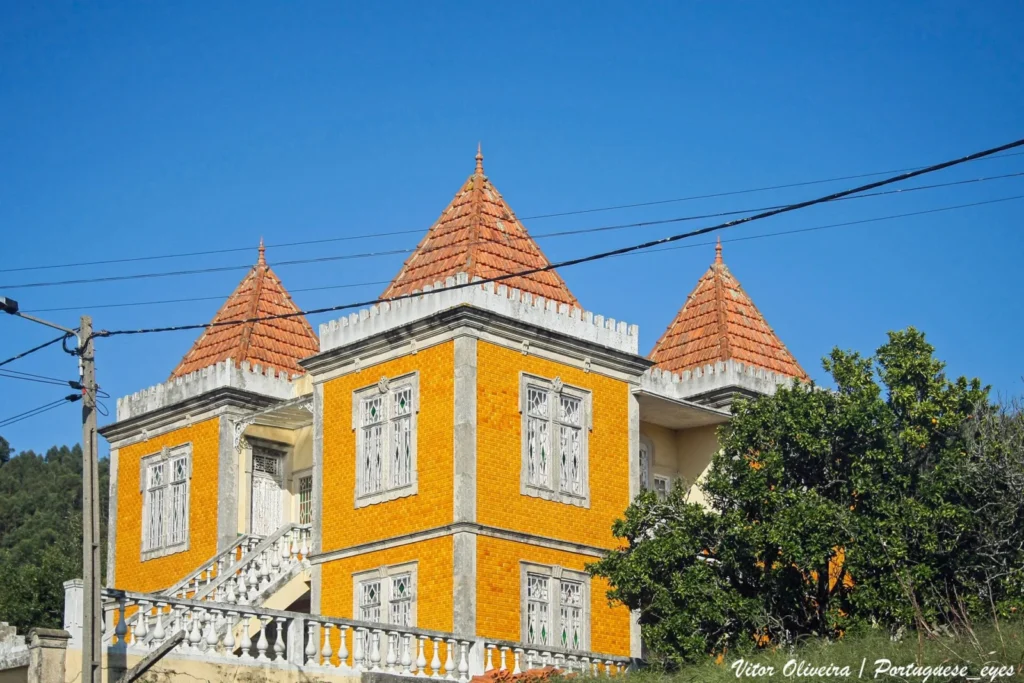
Leave from the town hall square, passing the Bôa Vista mansion, with an octagonal tower.
6.5 km

Albergaria-a-Nova
Private albergue right on the EN-1. After that you follow Rua Velha, parallel to the road.

Fradelos
A place in the parish (freguesia) of Branca; Hostel A Loja do Cantoneiro means a detour of about 600 m.
12.0 km

Pinheiro da Bemposta (station)
Station on the Vouga line and café-bakery; you cross the road on a pedestrian footbridge with steps.
13.8 km
Bemposta (Largo do Pelourinho)
Square with a pillory column (pelourinho), the former centre of the Bemposta municipality; Rua dos Paços do Concelho preserves 16th-century houses with stone doorways.
19.7 km
Oliveira de Azeméis
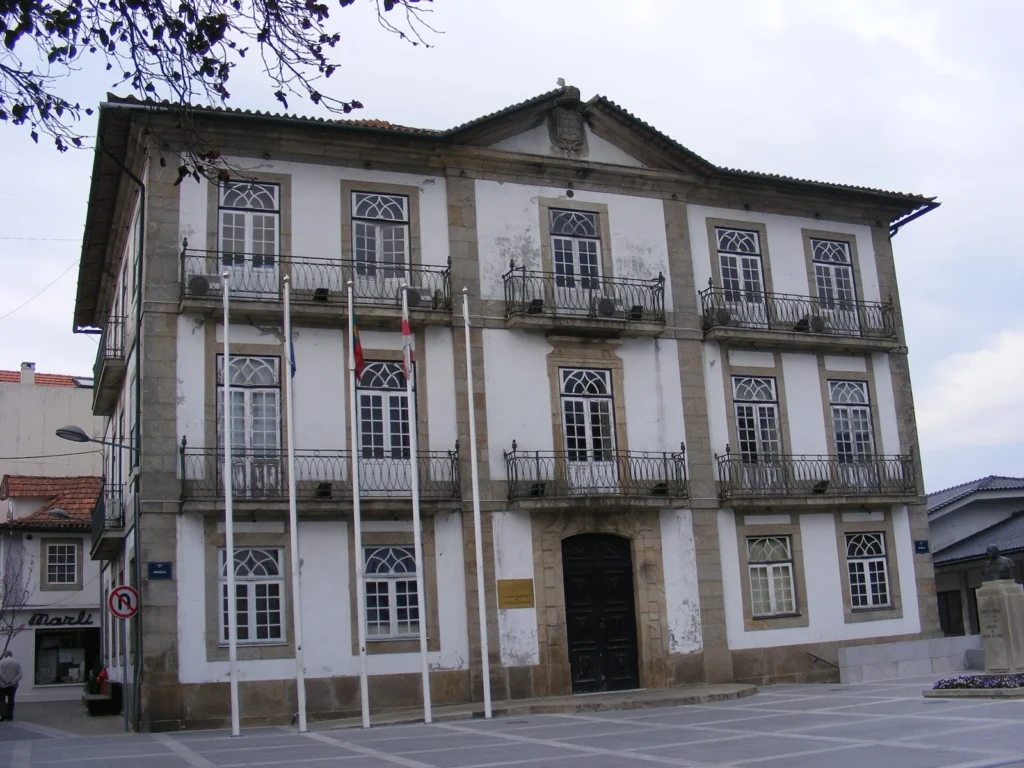
A city with all services: town hall, Roman milestone of Tiberius and the church of São Miguel. Hotel Dighton and local accommodation.

Santiago de Riba-Ul and Ponte do Salgueiro
Medieval Salgueiro bridge with a hórreo (granary) on the far side, after another unbarriered level crossing.
24.7 km

Vila de Cucujães
Albergue municipal de peregrinos do Apeadeiro (2024), in the former halt, 4.1 km from the end.
28.8 km

São João da Madeira (Largo Luís Ribeiro)
Circular square in the centre. A shelter with 9 beds at the Santa Casa da Misericórdia (extendable with mattresses).
Albergaria-a-Velha – São João da Madeira: stage guide
Stage profile
Distance: 28.8 km. Estimated time: 7 h 15 min. Difficulty: medium. Total elevation: 511 m of climb and 400 m of descent.
Warnings for this stage
- A long stage (28.8 km) and almost entirely urban: from district to district and on tarmac, with 80% pavements and cobbles.
- You cross the Vouga line several times at unbarriered level crossings; there are few trains, but you must look.
- Neglected eucalyptus woods with a lot of undergrowth: fire risk in summer.
- Between Besteiros and Oliveira de Azeméis, on Rua da Póvoa, an arrow beside some gabions forces a sharp right turn: it is easy to miss.
Variants and alternatives
- Splitting at Albergaria-a-Nova: Sleeping the night before in the private albergue at Albergaria-a-Nova cuts the stage to 22.3 km.
- Finishing at Vila de Cucujães: Municipal albergue in the former halt, 4.1 km before São João da Madeira.
What to see
- Pelourinho of Pinheiro da Bemposta: A 16th-century Manueline pillory with armillary spheres, the Cross of Christ and the arms of D. Manuel I; an Imóvel de Interesse Público (property of public interest) since 1933.
- Cruzeiro of Pinheiro da Bemposta: A cruceiro from 1604, rebuilt in 1774; a National Monument since 1910.
- Milestone of Tiberius (Oliveira de Azeméis): A 1st-century Roman milestone next to the Camino, in the city centre.
- Siza Vieira bank branch (Oliveira de Azeméis): An early work by the architect (1974), 50 m from the Camino; you can go in, but not photograph the interior.
- Museu da Chapelaria (São João da Madeira): The only museum on the peninsula dedicated to the hat, opened in 2005 in the former Empresa Industrial de Chapelaria (1914).
A bit of history
Bemposta was the seat of a municipality with a charter (foral) from D. Manuel I (15 August 1514) until it was abolished on 24 October 1855. On 10 May 1809, near Albergaria-a-Nova, the Anglo-Portuguese vanguard halted Soult’s troops during the second French invasion. Cucujães was a Benedictine monastery’s estate from 7 July 1139 (a gift from D. Afonso Henriques) and has been a town since 1927. São João da Madeira separated from Oliveira de Azeméis in 1926 because of its industrial weight (hats and footwear).
Food and drink
Francesinha: a sandwich of sliced bread filled with meats and cured sausages, grilled with cheese and covered in a spicy sauce, often with a fried egg and chips.
Practical tips
- Set off early: it is long and has little shade apart from the first eucalyptus wood.
- If you want to shorten it, the municipal albergue in Vila de Cucujães (12 beds, 2024) is right on the Camino.
- In São João da Madeira there are only 9 shelter beds; there are hostels and hotels as an alternative.
Practical guide to the Portuguese Camino
- Luggage Transfer on the Portuguese Camino
- Cycling the Portuguese Camino: Stages by Bike
- The Compostela Certificate on the Portuguese Camino
- Pilgrim Credential (Pilgrim Passport) for the Portuguese Camino
- How Long Is the Portuguese Camino? Distance, Days & Itineraries
- Best Time to Walk the Portuguese Camino (Weather by Month)
- The Portuguese Camino with Kids
- Guided & Self-Guided Portuguese Camino Tours