


History of Nigrán
The name appears in documents from the 13th century and, according to the philologist Gonzalo Navaza, comes from the Latin niger with the ending -án. Under the Ancien Régime the parish depended on the monastery of Oia. The Pazo de Cea was built in the late 16th century by the abbot Joan de Cea, and the writer Elena Quiroga lived in it.
What to see in Nigrán
Pazo de Cea
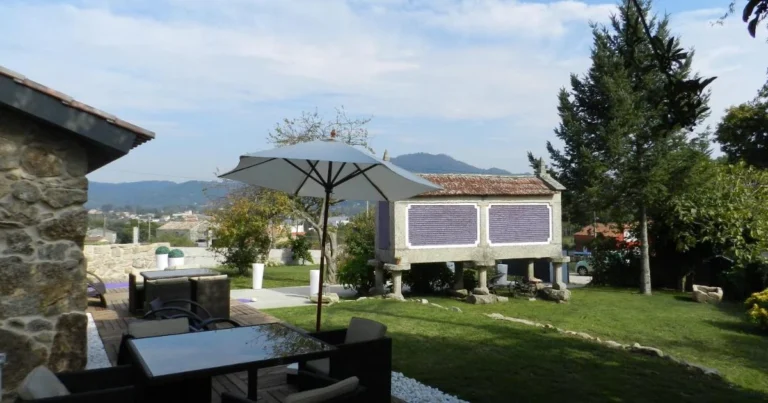
L-shaped pazo from the late 16th century, with a chapel, dovecote, hórreo and garden; today it is a restaurant.
Pazo de Cadaval
Founded in 1608, with a crenellated tower from the 19th century and large gardens; a Bien de Interés Cultural (listed heritage site) since 2006.
Abbot’s house
Next to the official route of the Camino.
Population and location
The parish of San Fiz de Nigrán had 4,116 inhabitants in 2022 and the municipality 18,005 in 2021 (IGE), over 34.8 km² and seven parishes. Its patron saint is San Fiz.
The Portuguese Camino in Nigrán
From the bridge at A Ramallosa, the official route passes the church of San Pedro da Ramallosa, crosses the AG-57 on a footbridge and climbs past the abbot’s house towards Priegue, at km 7.6. The stage ends in Vigo.
Frequently asked questions
Where to stay in Nigrán?
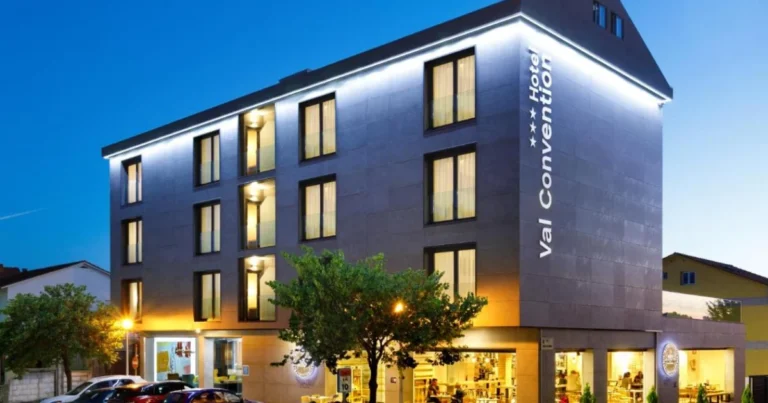
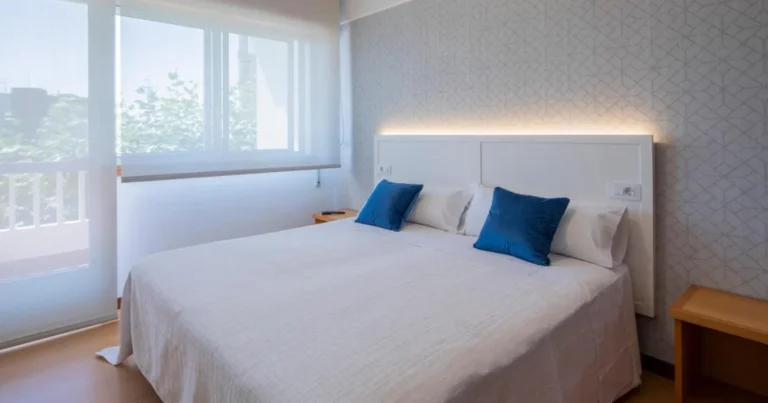
This guide lists 5 places to stay for pilgrims in Nigrán, with checked prices, beds and seasons.
Where does the Camino go in Nigrán?
The official route runs inland, past the abbot’s house; the coastal variant runs along the beaches of Panxón and Playa América.