History of Tomar
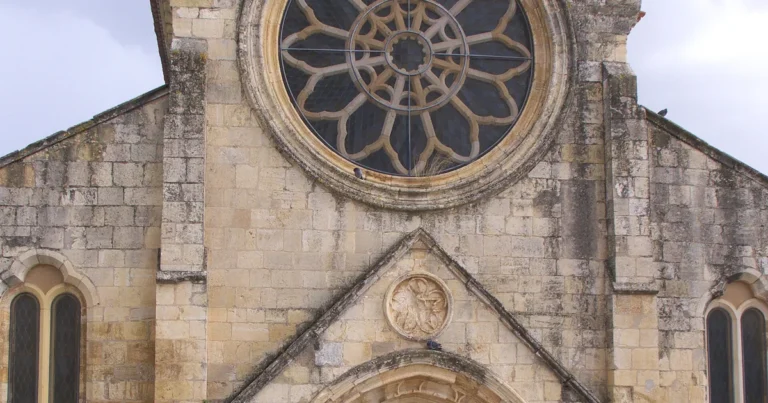
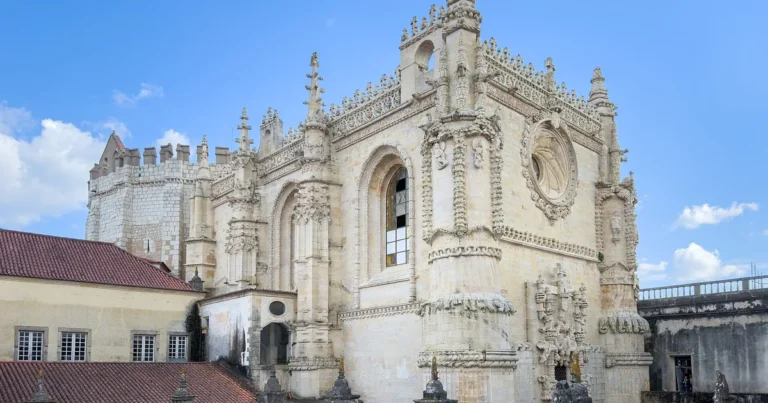
The name: there are several theories: ‘Villa Theodemari’ (José Pedro Machado), the Greek thymus (‘thyme’), or a pre-Roman name for the River Nabão (Jorge de Alarcão). Founded by the Templar Gualdim Pais; work on the Convent of Christ began in 1160. In Portugal the Order of Christ inherited the Templars’ possessions. The Convent of Christ has been a UNESCO World Heritage Site since 1983. Tomar was an industrial centre (paper, spinning, timber); today it lives mainly from tourism.
What to see in Tomar
Convent of Christ
Castle, Templar charola (round church), cloisters, Manueline church and Renaissance convent.
Tomar Synagogue
15th century, the oldest in Portugal; a National Monument since 1921; home to the Abraão Zacuto Luso-Hebraic Museum.
Igreja de São João Baptista
Late 15th century, with a Manueline portal and the Last Supper by Gregório Lopes.
Santa Maria dos Olivais
Holds the remains of Gualdim Pais.
Population and location
In the 2021 census, the town of Tomar had 14,123 inhabitants.
Festivals and food
Festa dos Tabuleiros: every four years in early July (last held in 2023, next in 2027); about 600,000 people took part in the 2019 procession.
The Portuguese Camino in Tomar
Tomar is the end of the Golegã – Tomar stage and the start of Tomar – Alvaiázere. The stage ends in the Praça da República, in a historic centre with bars, restaurants, shops and two hostels. You can get your stamp at the tourist office or at the Convent of Christ. It is also the closest point for visiting Fátima, about 30 km away.
Frequently asked questions
How many albergues are there in Tomar?
This guide lists 2 places to stay for pilgrims in Tomar, with checked prices, beds and seasons.
Which stage of the Portuguese Camino is Tomar on?
It is the end of the Golegã – Tomar stage (30.3 km (18.8 miles)) and the start of the Tomar – Alvaiázere stage (31.7 km (19.7 miles)).