






History of Caldas de Reis
The Romans called it Aquis Celenis, “the waters of the Celeni”. In 1105 the future King Alfonso VII was born in the town, and in 1167 Thomas Becket, a pilgrim to Santiago, spent the night here. Archbishop Juan Arias gave it a foral in 1254.
What to see in Caldas de Reis
Spas
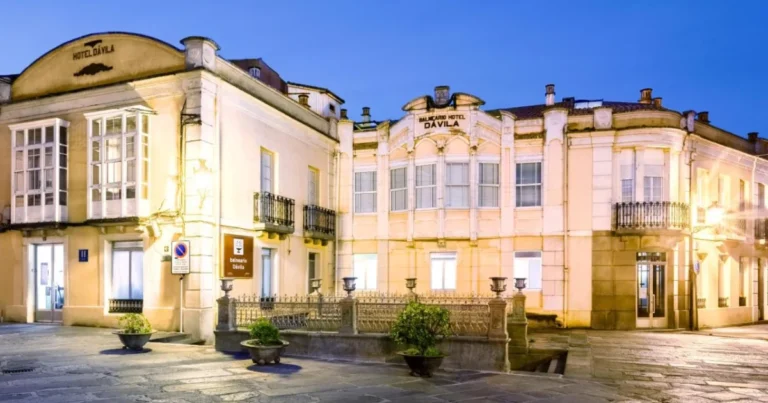
The Dávila bathhouse (1780) and the Acuña spa, completed in 1906, keep the thermal tradition alive.
Church of Santo Tomás Becket
The only one in Galicia dedicated to the saint, at the end of the stage.
Botanical garden
Over a century old, declared a picturesque site in 1962.
Petroglyphs of A Laxe dos Bolos
Rock art in Saiar.
Population and location
Caldas de Reis has about 9,600 inhabitants (INE, 2025) and covers about 68 km². It is the capital of its comarca, on the banks of the River Umia.
Festivals and food
The festivities of San Roque, in August, are the main ones, queimada included. The covered market brings together the produce of the comarca.
The Portuguese Camino in Caldas de Reis
The Camino crosses the old part of the town. Caldas is the end of Pontevedra – Caldas de Reis and the start of Caldas de Reis – Padrón, one of the most beautiful stages in Galicia.
Frequently asked questions
How many albergues are there in Caldas de Reis?
This guide lists 24 places to stay for pilgrims in Caldas de Reis, with checked prices, beds and seasons.
What is special about Caldas de Reis?
Its thermal waters, used since Roman times and today in the Dávila and Acuña spas, and the church of Santo Tomás Becket, the only one in Galicia.
How many kilometres is it from Caldas de Reis to Santiago?
About 43 km (26.7 miles), in two stages: Caldas de Reis – Padrón and Padrón – Santiago.
