

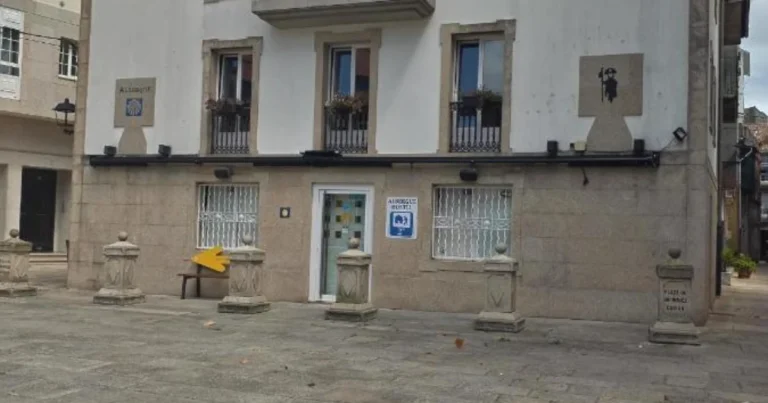


History of Padrón
The Roman army arrived around 26 BC, and in AD 74 Iria became a municipium under Vespasian: Iria Flavia. It was an episcopal see until 1095, when Urban II moved it to Santiago. The town’s name comes from the pedrón, a Roman altar dedicated to Neptune.
What to see in Padrón
Church of Santiago and the Pedrón
Under the altar it keeps the pedrón, the Roman altar to which, according to tradition, the Apostle’s boat was moored.
Collegiate church of Santa María de Iria Flavia
Considered the second cathedral of Compostela, 1 km along the Camino.
Rosalía de Castro’s house
The house at A Matanza, now a house-museum of the poet.
Santiaguiño do Monte
A hermitage on a hill among rocks, with its own pilgrimage festival.
Population and location
Padrón has 8,334 inhabitants (INE, 2025) and covers 48.37 km². It is the capital of the Sar comarca, already in the province of A Coruña, at the confluence of the Sar and the Ulla.
Festivals and food
The Padrón peppers, grown mainly in Herbón and brought, according to tradition, by the Franciscans, are the town’s most famous product. The Sunday market and the pilgrimage festival of Santiaguiño do Monte are the town’s big events.
The Portuguese Camino in Padrón
Caldas de Reis – Padrón and the Spiritual Variant end here; the Variant arrives along the river Ulla, recalling the Traslatio. From Padrón it is 24.4 km to the cathedral.
Frequently asked questions
How many albergues are there in Padrón?
This guide lists 13 places to stay for pilgrims in Padrón, with checked prices, beds and seasons. The public albergue is Albergue de peregrinos de Padrón (48 beds, no advance booking).
What is the Pedronía?
A certificate specific to Padrón for pilgrims; it costs €2 in 2026. Ask about it in the town.
How many kilometres is it from Padrón to Santiago?
24.4 km (15.2 miles), in a stage of about 6 hours.
