




History of Tui
The city began as Castellum Tude, a stop on Roman road XIX beside the Minho (Miño). It was an episcopal see from the 5th century, and in 1170 King Ferdinand II moved the settlement to the present hilltop, surrounded it with walls and granted it a charter. This frontier position shaped its history for centuries: until 1833 it was the capital of the province of Tui, one of the seven of the old Kingdom of Galicia.
What to see in Tui
Cathedral of Santa María
Begun in 1120 in the Romanesque style, it was consecrated in 1225, when its Gothic main façade was already finished. Its battlements and towers give it the look of a fortress, which makes sense in a city that guarded the border with Portugal for centuries. It is the seat of the Diocese of Tui-Vigo and the usual starting point for pilgrims who begin here.
Old town
It covers about 10 hectares and is considered the second largest in Galicia after the one in Santiago. It is worth walking round it unhurriedly before you start walking.
Convent of the Poor Clares (the Encerradas)
Founded in 1524, its church began to be built in 1688 under the direction of Domingo de Andrade. The nuns still live in enclosure, hence the popular name ‘as Encerradas’ (the shut-in ones). It holds a 17th-century Baroque altarpiece.
San Bartolomé de Rebordáns
One of the oldest churches in Galicia, of pre-Romanesque origin, on the way out of the city. The Camino passes right beside it in the first kilometres of the stage.
Convent of Santo Domingo and the International Bridge
The convent of Santo Domingo is Gothic. At the foot of the old town, the International Bridge, designed by the engineer Pelayo Mancebo, links Tui with Valença, with which it has formed a Euro-city since 2012.
Population and location
Tui has 17,468 inhabitants (INE, 2025) and a municipal area of 68.3 km². It is the capital of the Baixo Miño district and lies on the right bank of the river, which here forms the border with Portugal. The highest point in the municipality is Monte Aloia, at 632 metres.
Festivals and food
The main festivals are those of San Telmo, the patron saint: they begin on Holy Saturday and end on the Monday after Easter Sunday, ‘Lunes de San Telmo’. During those days the angula (baby eel) festival is also held; angula is one of the products of the Minho, along with salmon, lamprey and shad.
The Portuguese Camino from Tui
Tui is the first Galician city on the Portuguese Camino Central Route and the most popular starting point for anyone who wants to walk the Camino in a week: from here it is about 115.8 km (71.9 miles) to Santiago, in six stages. The first is Tui – O Porriño. Full planning details are in the guide Camino de Santiago from Tui.
Frequently asked questions
How many kilometres is it from Tui to Santiago?
About 115.8 km (71.9 miles) along the Portuguese Camino Central Route, in six stages: Tui – O Porriño, O Porriño – Redondela, Redondela – Pontevedra, Pontevedra – Caldas de Reis, Caldas de Reis – Padrón and Padrón – Santiago.
Can you get the Compostela if you start in Tui?
Yes. The Pilgrim’s Office awards it to anyone who walks at least the last 100 km, and from Tui it is a little over 115.
How many albergues are there in Tui?
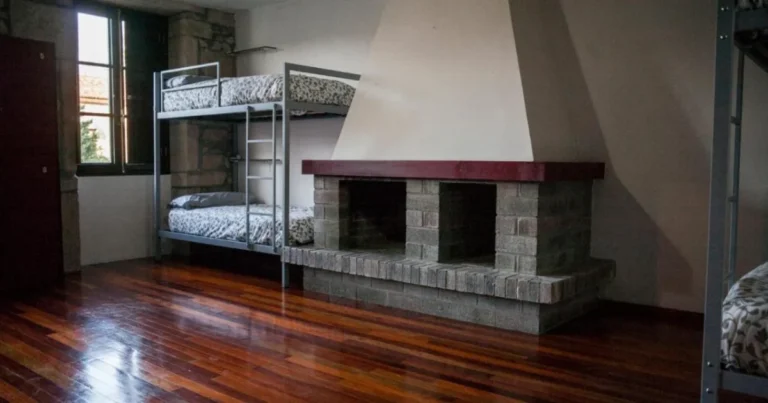
This guide lists 18 places to stay for pilgrims in Tui, with checked prices, beds and seasons. The public albergue is Albergue de peregrinos de Tui (36 beds, no advance booking).
When are the San Telmo festivals?
They begin on Holy Saturday and last until the Monday after Easter Sunday, the Lunes de San Telmo.

